
ACL Anatomy and Function: Understanding the Anterior Cruciate Ligament
By Boon Hospital
Introduction
The knee is one of the most important joints in the human body, helping us walk, run, climb stairs, and perform everyday activities. One of the key structures that keeps the knee stable is the Anterior Cruciate Ligament (ACL). Understanding ACL anatomy and function can help people recognize the importance of knee health, prevent injuries, and seek timely medical care when necessary.
At Boon Hospital, Pavagada, patients can seek medical guidance for knee pain, sports-related injuries, and other orthopedic concerns. Learning about the ACL is an important first step toward understanding knee stability and mobility.
What Is the Anterior Cruciate Ligament (ACL)?
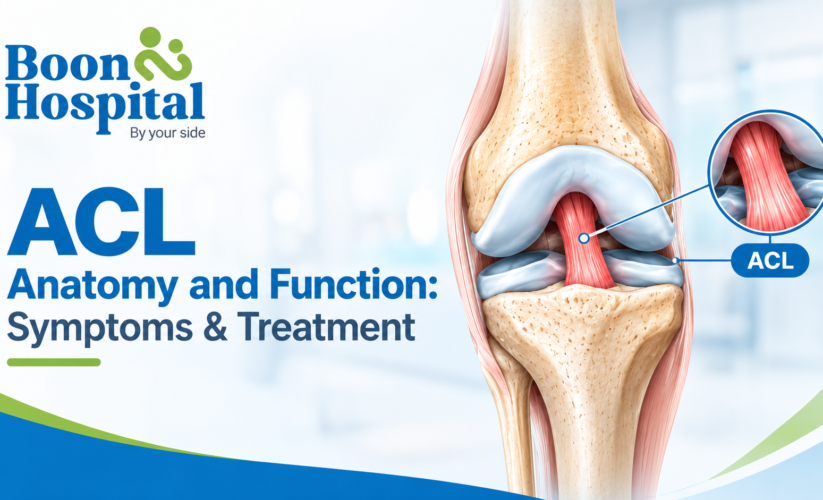
The Anterior Cruciate Ligament, commonly known as the ACL, is a strong band of connective tissue located inside the knee joint. It connects the femur (thighbone) to the tibia (shinbone) and plays an essential role in maintaining knee stability.
The ACL is one of the four major ligaments of the knee. It works alongside other ligaments, muscles, and tendons to support controlled movement and help prevent excessive motion between the thighbone and shinbone.
ACL injuries are common among athletes who participate in sports involving sudden stops, jumping, twisting, or changes in direction. However, an ACL injury can also occur during everyday activities or accidental falls.
ACL Anatomy: Where Is the ACL Located?
The ACL is located in the centre of the knee joint, inside the joint capsule. It runs diagonally between the femur and tibia, crossing with the posterior cruciate ligament (PCL).
The ACL has two main functional bundles:
1. Anteromedial Bundle
The anteromedial bundle is particularly important in limiting forward movement of the tibia relative to the femur. It contributes significantly to knee stability during different positions of knee bending.
2. Posterolateral Bundle
The posterolateral bundle helps control rotational stability and contributes to limiting forward movement of the tibia, particularly when the knee is closer to full extension.
Together, these bundles help the ACL control movement and maintain stability during walking, running, jumping, and turning.
What Are the Main Functions of the ACL?
The ACL performs several important functions that support normal knee movement.
1. Prevents Excessive Forward Movement
One of the ACL’s primary functions is to prevent the tibia from moving too far forward relative to the femur. This helps maintain proper alignment and stability of the knee joint.
2. Supports Rotational Stability
The ACL helps control excessive twisting and rotational movement of the knee. This is particularly important during sports, sudden turns, and changes in direction.
3. Helps Maintain Knee Stability
The ACL works together with the other knee ligaments and surrounding muscles to provide stability during physical activities. It helps the knee tolerate movement while reducing unwanted shifting between the bones.
4. Supports Everyday Activities
Walking, running, climbing stairs, and changing direction require coordinated knee movement. The ACL contributes to the stability needed to perform these activities safely and efficiently.
5. Contributes to Athletic Performance
Activities such as football, basketball, badminton, and other sports often involve sudden stops, jumping, and pivoting. A healthy ACL helps support the knee during these movements.
What Causes an ACL Injury?
An ACL injury occurs when the ligament is stretched excessively or torn. Common causes include:
- Sudden changes in direction while running.
- Stopping abruptly while moving at speed.
- Landing awkwardly after a jump.
- Twisting the knee while the foot remains planted.
- Direct impact or collision during sports.
- Accidental falls or other traumatic injuries.
ACL injuries can range from mild stretching to a complete tear. The severity of the injury and the patient’s activity level influence the treatment approach.
Common Symptoms of an ACL Injury
Symptoms may vary depending on the severity of the injury. Common signs include:
- A popping sound or sensation at the time of injury.
- Rapid swelling around the knee.
- Knee pain and tenderness.
- Difficulty bearing weight.
- Reduced range of motion.
- A feeling that the knee is unstable or may give way.
Not everyone experiences all these symptoms. If a knee injury causes significant pain, rapid swelling, difficulty walking, or instability, seek prompt medical assessment.
How Is an ACL Injury Diagnosed?
A healthcare professional may use several methods to assess a suspected ACL injury.
Physical examination: The clinician checks knee movement, swelling, tenderness, and ligament stability using specific examination techniques.
Medical history: Information about how the injury happened, when symptoms began, and whether the knee feels unstable can help guide the assessment.
Imaging tests: X-rays may be used to check for fractures or other bone injuries. An MRI may be recommended when a ligament tear or associated soft-tissue injury needs further evaluation.
The appropriate investigations depend on the patient’s symptoms and clinical findings.
Treatment Options for ACL Injuries
Treatment depends on the extent of the injury, knee stability, associated damage, age, activity level, and individual goals.
Non-Surgical Treatment
Some ACL injuries can be managed without surgery, particularly when the knee is stable enough for the patient’s daily activities. Treatment may include:
- Rest and appropriate activity modification.
- Ice packs wrapped in a cloth to help manage swelling.
- Compression and elevation when appropriate.
- A knee brace or crutches when recommended.
- Physiotherapy to improve strength, flexibility, balance, and knee control.
A healthcare professional should guide the rehabilitation plan and the safe return to physical activity.
Surgical Treatment
ACL reconstruction may be considered for patients with significant knee instability, certain associated injuries, or a need to return to activities involving pivoting and sudden changes in direction.
The procedure generally involves reconstructing the damaged ligament using a tendon graft. Rehabilitation after surgery is essential and often takes several months, with return to sport based on functional recovery and professional assessment rather than time alone.
ACL Rehabilitation and Recovery
Rehabilitation is an important part of recovery after an ACL injury, whether treatment is surgical or non-surgical.
A supervised rehabilitation programme may focus on:
- Reducing pain and swelling.
- Restoring normal knee movement.
- Strengthening the quadriceps, hamstrings, and surrounding muscles.
- Improving balance and coordination.
- Gradually rebuilding walking, running, and sport-specific abilities.
- Returning to activities only when appropriate clinical and functional milestones are achieved.
Recovery time varies from person to person. Following medical advice and avoiding a premature return to demanding activities can help reduce the risk of further injury.
How Can You Help Prevent ACL Injuries?
Although not all ACL injuries can be prevented, certain measures may help reduce the risk:
- Warm up before exercise and sports.
- Strengthen the muscles around the hips, thighs, and knees.
- Practise correct jumping and landing techniques.
- Improve balance, coordination, and movement control.
- Increase exercise intensity gradually.
- Use appropriate footwear for the activity and playing surface.
- Follow a structured injury-prevention programme when participating in sports.
Consistent conditioning and good movement techniques can help support long-term knee health.
Why Choose Boon Hospital for Orthopedic Guidance?
Knee pain and ligament injuries can affect mobility, work, sports, and quality of life. Early assessment can help identify the cause of symptoms and determine the next steps in care.
At Boon Hospital, Pavagada, patients can seek medical guidance for orthopedic concerns and receive advice about appropriate evaluation, treatment options, and rehabilitation needs.
If you experience knee swelling, pain, or instability following an injury, consult a qualified healthcare professional for an assessment and an individualized treatment plan.
Conclusion
The Anterior Cruciate Ligament plays a vital role in knee stability by controlling excessive forward movement of the tibia and helping limit unwanted rotation. ACL injuries can occur during sports, sudden movements, or accidents, and they may affect everyday mobility if not properly assessed.
Understanding ACL anatomy, function, symptoms, and treatment options can help people make informed decisions about their knee health. At Boon Hospital, Pavagada, seeking timely medical guidance can be an important step toward appropriate care and recovery.
If you experience persistent knee pain, swelling, or instability, arrange a medical consultation to understand the cause and the treatment options available.
Frequently Asked Questions (FAQs)
1. What is the main function of the ACL?
The main function of the Anterior Cruciate Ligament is to prevent excessive forward movement of the tibia relative to the femur and help control rotational stability of the knee.
2. Where is the ACL located in the knee?
The ACL is located inside the knee joint, connecting the femur (thighbone) to the tibia (shinbone).
3. What are the common signs of an ACL injury?
Common signs include knee pain, rapid swelling, a popping sensation at the time of injury, reduced movement, and a feeling that the knee may give way.
4. Can an ACL tear heal without surgery?
Some ACL injuries can be managed without surgery through activity modification, rehabilitation, and other appropriate treatments. However, the right approach depends on knee stability, injury severity, activity requirements, and associated damage.
5. How long does ACL recovery take?
Recovery varies according to the injury and treatment. Recovery after ACL reconstruction often takes several months, and returning to sports may take around 9–12 months or longer, depending on individual progress and clinical assessment.
6. Can I walk with an ACL injury?
Some people can walk with an ACL injury, while others experience pain, swelling, or instability. Avoid forcing movement on an injured knee and seek medical advice, particularly if walking is difficult.
7. Which exercises help support ACL recovery?
Depending on the stage of recovery, a physiotherapist may recommend quadriceps and hamstring strengthening, range-of-motion exercises, balance training, and progressive functional exercises. Exercises should be tailored to the injury and treatment plan.
8. When should I consult a doctor for a suspected ACL injury?
Seek prompt medical assessment after a knee injury that causes rapid swelling, significant pain, instability, or difficulty bearing weight. Severe symptoms or inability to walk warrant urgent evaluation.
9. Where can I seek orthopedic guidance in Pavagada?
You can contact Boon Hospital, Pavagada, to enquire about an orthopedic consultation and the appropriate assessment for knee pain or a suspected ligament injury.
Hospital: Boon Hospital, New Bus Stand Road, Pavagada, Karnataka 561202
Phone: +91 97313 67039
Website: https://boonhospital.com/boon/
Medical disclaimer: This article is intended for general educational purposes and does not replace professional medical advice, diagnosis, or treatment.

DR. SAI KUMAR TALARI
MBBS, MS ORTHOPAEDICS, EX-SENIOR RESIDENT
